Rapid Prototyping Auckland · Lost Foam · 3D Print · Short Run
Rapid Metal Prototyping Auckland — Lost Foam, 3D Print & Short Run Casting
No hard tooling required. From a sketch, CAD file or existing part — we turn your concept into a physical metal object in quick time. One-off proofs to short production runs, all from our Glendene, Auckland foundry.
Prototyping Methods
Foundry, All In-House
Alloys Available
Our Prototyping Methods
Three Prototyping Methods.
One Foundry, Auckland.
Every prototyping job is different. Whether you need a single proof of concept with no tooling cost, a high-accuracy part from a digital file, or a short production run from an existing object — we have the method and the experience to deliver it fast.
01 · No Hard Tooling
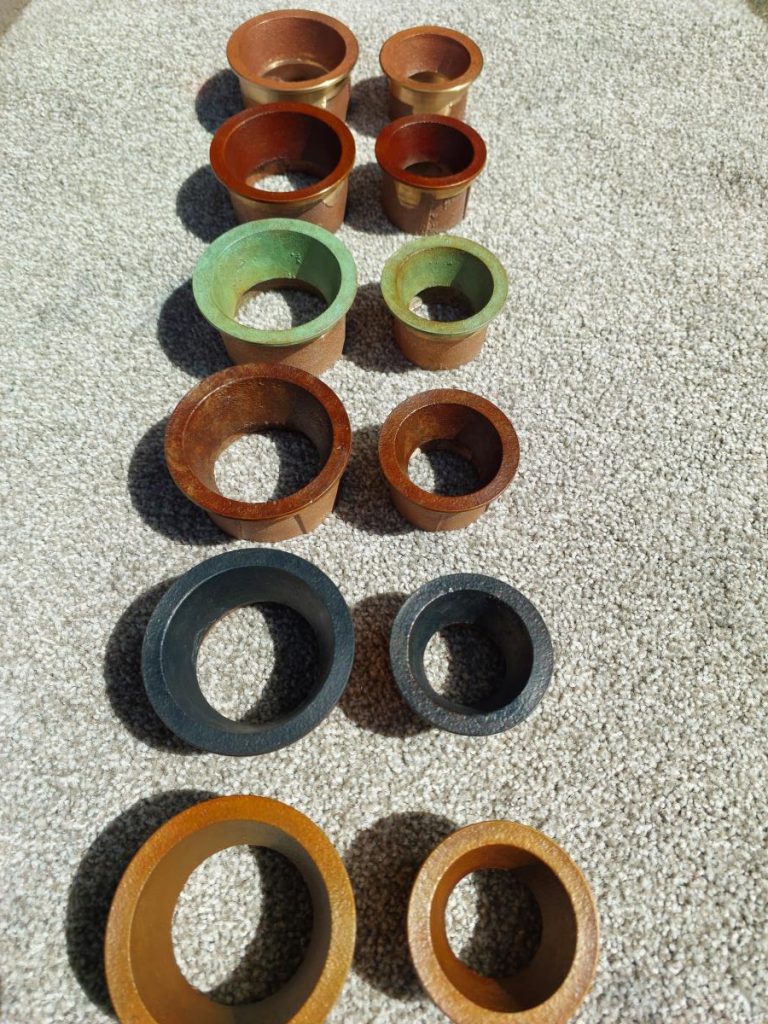
Lost Foam · No Tooling · One-Off
Lost Foam Casting
Lost foam casting uses an expanded polystyrene (EPS) pattern in place of a traditional hard tool. The foam pattern is packed in unbonded sand and metal is poured directly — the foam vaporises instantly, leaving a precise metal casting in its place.
No rubber mould, no die, no hard tooling required. This makes it the fastest and most cost-effective method for one-off prototypes and short runs — especially for complex three-dimensional shapes where traditional patternmaking would be slow and expensive.
- No hard tooling required — lowest prototype cost
- Complex 3D geometry possible — no draft required
- Fast turnaround — pattern made quickly from EPS foam
- One-off to short run without tooling investment
- Suitable for aluminium, bronze and iron alloys
02 · Digital Accuracy
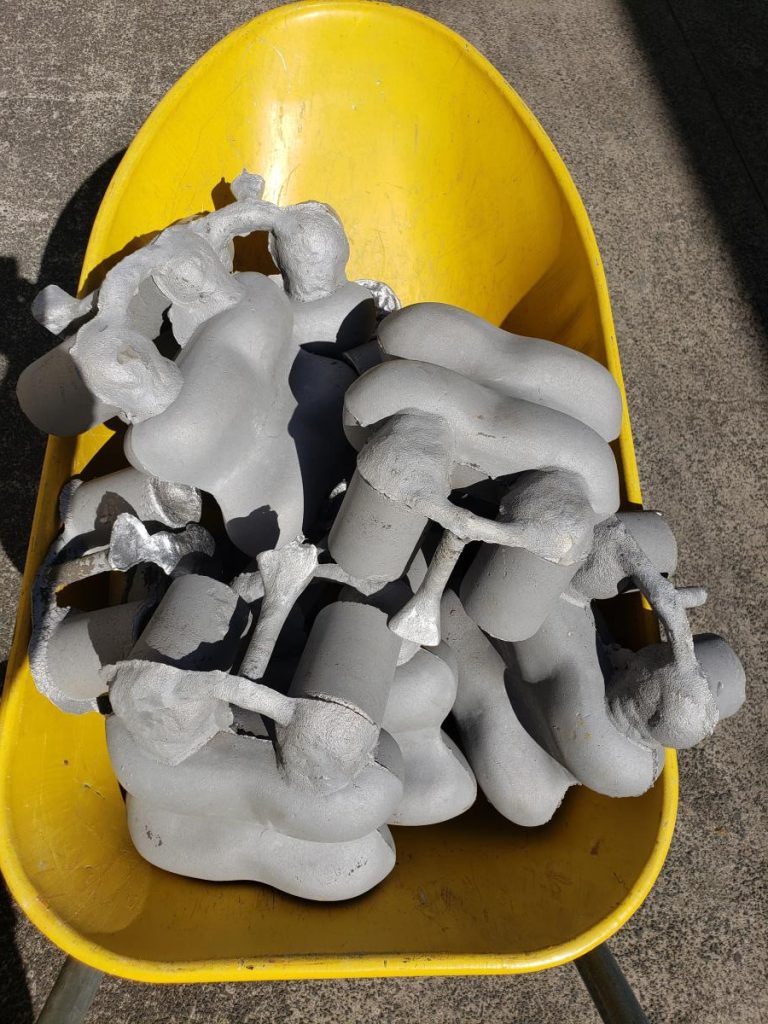
3D Print · High Accuracy · CAD-Ready
3D Printed Pattern Casting
A 3D printed pattern replaces traditional hand-made tooling — bringing the speed and accuracy of digital design directly into the casting process. Your CAD file is printed, used as the pattern, and cast in your chosen alloy. High accuracy, fast turnaround, lower cost for short runs.
This method is particularly powerful for engineering components, architectural fixtures and any part where dimensional accuracy matters. It can also be combined with hardsand or investment casting to achieve different surface finish and geometry outcomes.
- Cast direct from your CAD file — no traditional tooling
- High dimensional accuracy from digital source
- Short runs cost-effective — no expensive die required
- Compatible with hardsand and investment casting methods
- Ideal for engineering, architectural and industrial parts
03 · Reverse Engineering
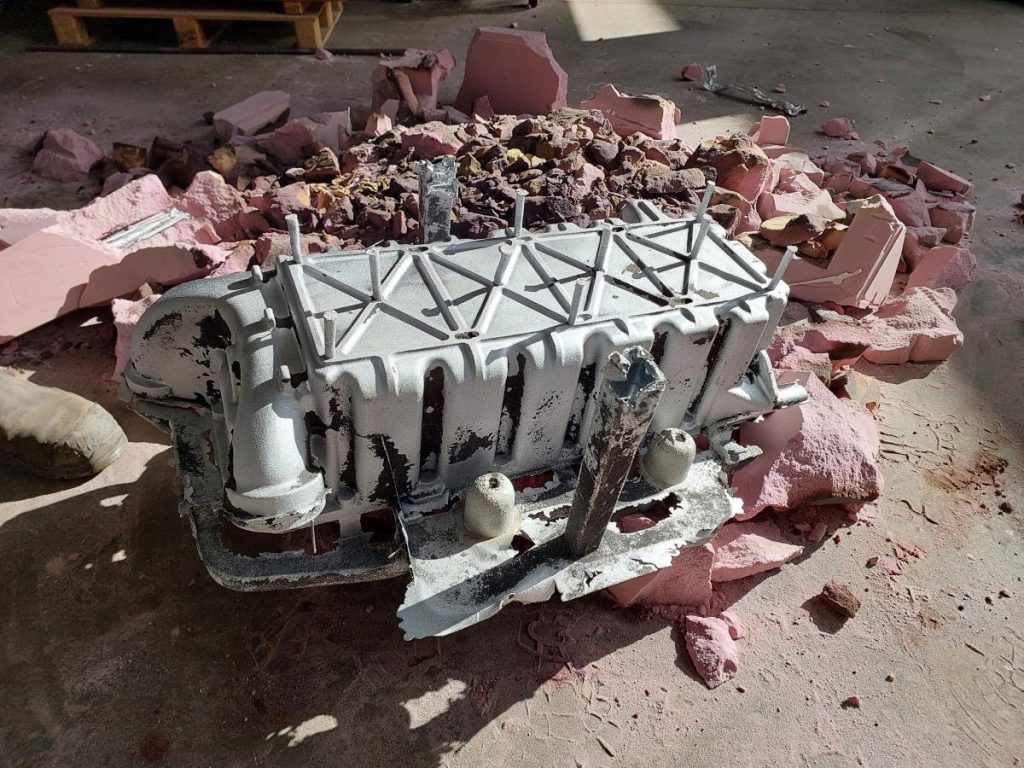
Scanning · Digital Manipulation · Reverse Engineering
Scanning & Reverse Engineering
Got a broken part, a damaged artwork or a one-off casting with no drawings? We can 3D scan the original, create a digital file, apply any modifications — contraction allowance, machine allowance, design changes — and produce a pattern ready for casting.
Scanning units range from small turntable setups for fine detail work through to onsite scanning for large or immovable objects. Digital modelling handles organic shapes; parametric modelling handles engineering and measurement-based work. We can piece back together a broken artwork, straighten, fill and produce a corebox from a single scan session.
- Scan from broken parts, artworks or physical objects
- Onsite scanning capability for large or immovable items
- Modifications, upscaling and engineering applied digitally
- Reverse engineer discontinued or hard-to-source parts
- Digital file kept on record — reorder anytime
Why Rapid Prototyping
Why Prototype with Molten Manufacturing
Most foundries outsource their core making to third-party suppliers. We don’t. Here’s why that matters for your job.
Fast to Metal
From enquiry to physical metal part in quick time. Our methods are chosen to minimise lead time without sacrificing quality — because seeing your product in metal drives better decisions faster.
No Hard Tooling Required
Lost foam and 3D-printed pattern methods eliminate the need for expensive dies or rubber moulds. That means a dramatically lower upfront cost for your first part — ideal when you’re still validating design or function.
One-Off to Production Run
Start with a single prototype and scale up. The same team, the same foundry, the same quality standard — whether you’re proving a concept or moving into short-run production. No need to find a new supplier.
The Prototyping Process
How Your Metal Prototype Gets Made
From your idea, sketch, file or existing part — here’s how we get a metal prototype into your hands.
01
Consultation
Bring us your idea, drawing, CAD file or physical part. Shaun will recommend the fastest and most cost-effective method — lost foam, 3D print or scanning — based on your geometry, material and timeline.
02
Pattern & Preparation
We prepare the pattern — cutting EPS foam, printing from your CAD file, or scanning and modelling from an existing part. Contraction allowance and any required modifications are applied at this stage.
03
Casting
Your chosen alloy — aluminium, bronze, copper-base or iron — is cast using the appropriate method. Casting temperature, pour speed and cooling are managed from decades of hands-on experience.
04
Fettling & Delivery
Runners and risers are removed, the part is ground and finished to your requirements. If it’s a design proof, we can deliver raw. If it’s going into use, we finish it production-ready. Your call.
Rapid Prototyping Auckland
Auckland's Metal Rapid Prototyping Foundry
Molten Manufacturing provides rapid metal prototyping services from our Glendene, Auckland foundry. Using lost foam casting, 3D-printed pattern casting and 3D scanning with reverse engineering — we can turn your concept into a physical metal object in quick time, without the cost and delay of traditional hard tooling.
We work with engineers, architects, designers, automotive restorers, artists and manufacturers across New Zealand and internationally. Whether you need a single bespoke bronze artwork, an automotive manifold prototype or a short run of industrial components — we have the methods and experience to deliver.
Our full-service foundry capability means your prototype can move directly into production casting without changing supplier. Greensand, hardsand and investment casting all available in-house.
Which Prototyping Method Do You Need?
Choosing the Right Prototyping Method
The right method depends on your geometry, material, quantity and how quickly you need the part.
Lost foam is ideal when you need the fastest, cheapest route to a physical metal part with no tooling cost — especially for complex 3D shapes. 3D printed patterns suit jobs where you have a CAD file and need higher dimensional accuracy or want to move directly into short-run production. Scanning and reverse engineering is the answer when you have a physical object, broken part or damaged artwork and no drawings exist.
Not sure? Call Shaun on 022 088 2040 — he’ll give you a straight answer on the fastest and most cost-effective route for your specific job.
Common Questions
Rapid Prototyping FAQs
What materials can you cast for prototypes?
We can prototype in any alloy we regularly cast — aluminium (CC601, 5008 marine grade, LM2, LM4, LM6), copper-base alloys (C87300 silicon bronze, AB2, gunmetal, brass, phosphor bronze) and iron (grey iron, Ni-hard, Ni-resist, SG iron). The alloy choice is yours — we'll advise if a particular alloy has any implications for the prototyping method selected.
Do I need drawings or a CAD file to get a prototype?
No — many of our prototyping clients come with nothing more than a sketch, a photo or a physical object. Lost foam patterns can be shaped from a sketch; scanning can capture an existing part with no drawings at all. A CAD file is useful for 3D printed patterns, but it's not a requirement to get started. Call Shaun and describe what you're trying to achieve — he'll work out the best approach from there.
How quickly can I get a prototype?
Lead time depends on the complexity of the part and the method used. Lost foam prototypes can often be turned around very quickly once the brief is clear. 3D printed pattern jobs depend on print time and complexity. Investment casting prototypes take longer due to the ceramic shell build (around 4 days of dipping alone). Shaun will give you a realistic timeframe when you discuss your project — we don't overpromise.
Can a prototype move directly into production?
Yes — and this is one of the key advantages of prototyping with a full-service foundry. Once your prototype is approved, we can move directly into greensand, hardsand or investment casting production without you needing to find a new supplier or re-brief anyone. The same team, the same quality standard, scaled up to your required quantity.
What is reverse engineering and when is it useful?
Reverse engineering uses 3D scanning to capture the geometry of an existing physical object and create a digital file from it. It's useful when you need to reproduce a discontinued part with no drawings, repair or reproduce a damaged artwork, modify an existing casting, or simply create a digital record of a physical object for future reference. We have scanning units for both small detailed work and large onsite objects.
Need a Metal Prototype?
No hard tooling, no minimum order. Call Shaun — he’ll tell you the fastest route from concept to metal.