Three fundamental methods. One foundry. Aluminium, copper-base and iron alloys — cast to your specification from our Glendene, Auckland facility.
Every job is different. Size, complexity, quantity, surface finish and budget all drive which process we use. We’ll always recommend the right method for your job — not whichever suits us that day.
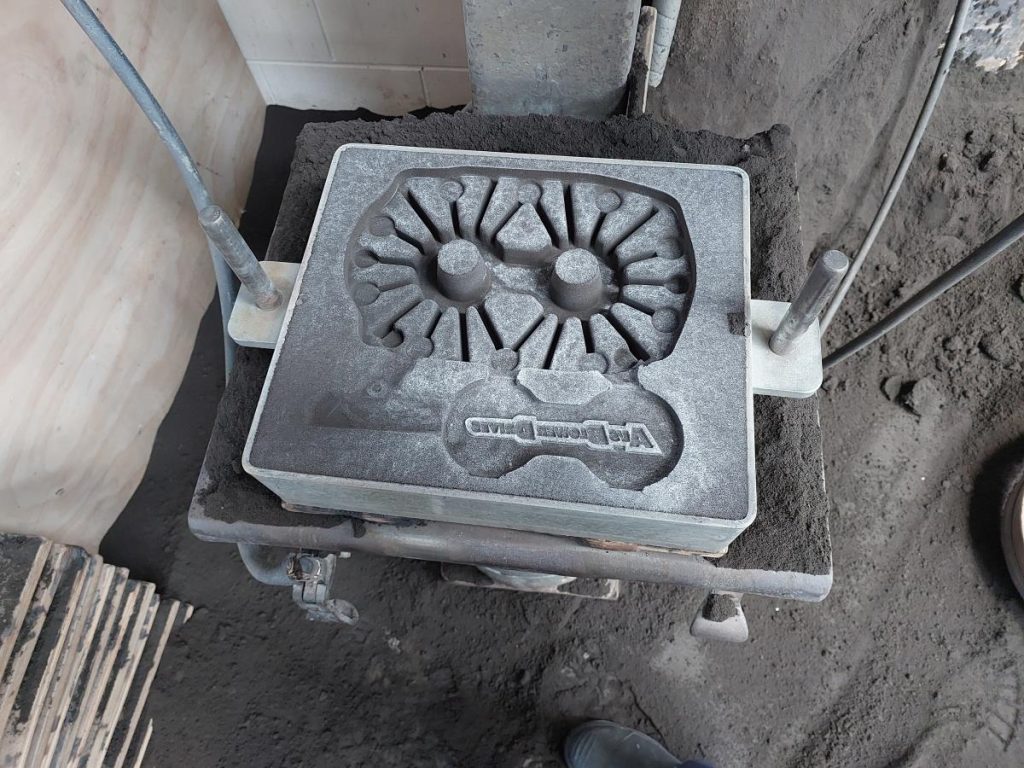
One of the oldest and most proven casting methods in metalworking. Clay-bonded sand (Bentonite) is rammed into steel flasks to produce non-complex castings at production scale. The sand is 100% reusable — making it the most cost-effective method for repeat production runs.
Our greensand is naturally sourced from New Zealand and world-renowned for its quality. Its clay content and angular grain structure allow for excellent green strength and fine surface finishes.
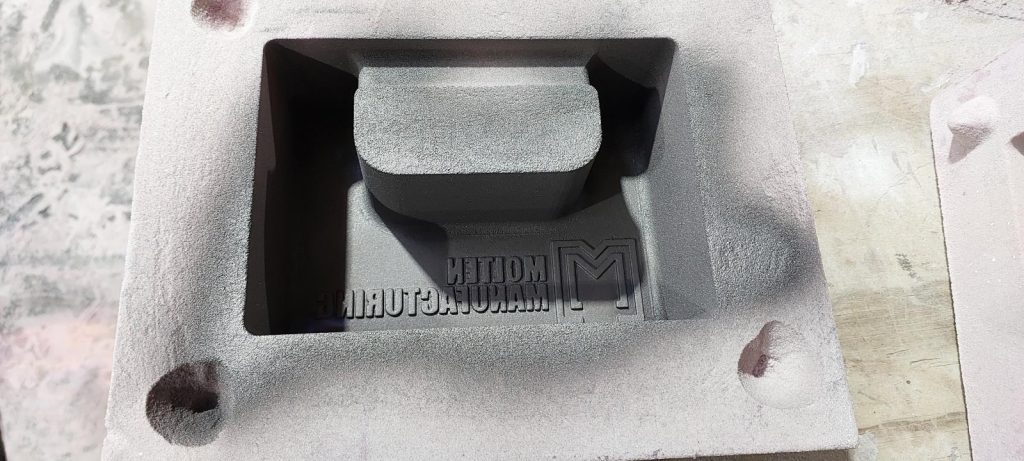
Resin-bonded sand creates firm, robust moulds that handle far more complex geometry than greensand. Minor undercuts break away locally rather than destroying the whole mould — and larger undercuts can be cored into multi-segment moulds.
A proprietary refractory paint on the mould surface can produce bronze finishes rivalling investment casting at a fraction of the cost. Almost any physical object can be cast — wood, plastic, wax, old castings, cardboard — if it holds its shape, we can work with it.
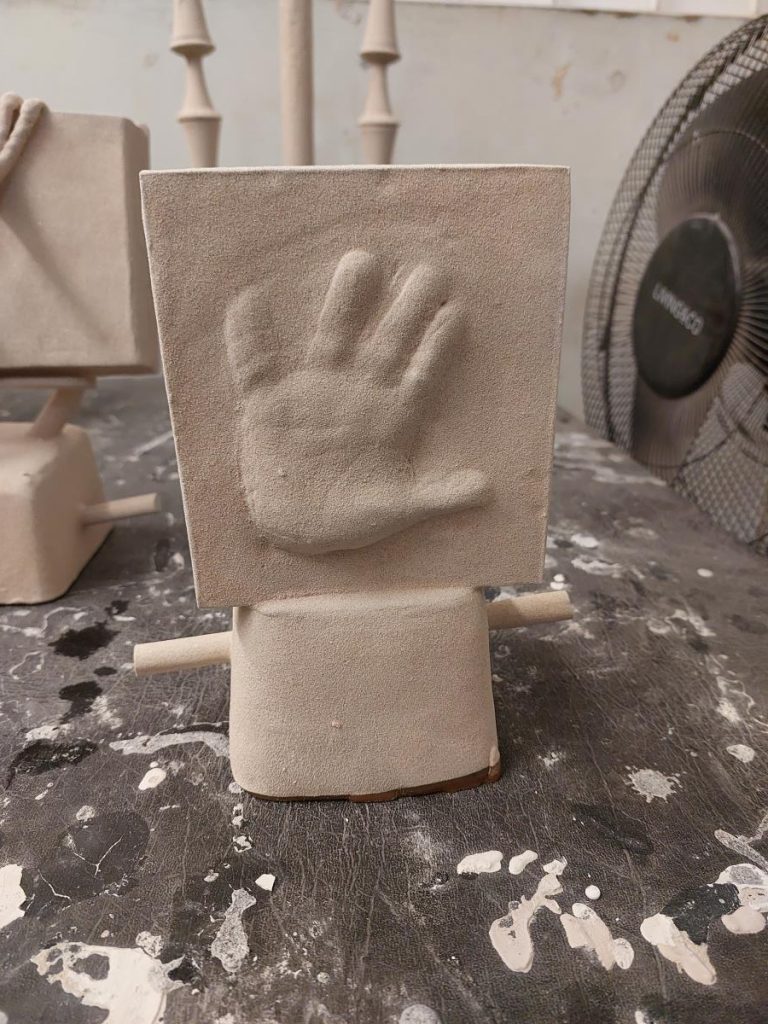
The highest dimensional accuracy and finest surface finish of all three methods. A ceramic shell is built up over a wax or PLA pattern over 4 days of dipping, then fired to 1000°C — the wax is removed and molten metal poured directly into the void.
Molten Manufacturing uses its own wax blends formulated for shrinkage control and detail reproduction. Dipping is carried out in a climate-controlled environment — creating the strongest possible shell for gallery-quality results every time.
A metallurgist is available for technical alloy advice. Custom batching to your specification is available across all three metal groups.
Heat treating with a certified report is available on request — discuss prior to quoting.
C87300 silicon bronze is the preferred alloy for gallery-quality sculpture. AB2 is the marine propeller standard in NZ.
Not sure which aluminium alloy suits your application? Ask our metallurgist →
When a job arrives, many factors drive the process — size, complexity, quantity, cost, surface finish and end use. Here’s how we work through it.
Bring us your idea, drawing, image or existing pattern. Our team will discuss the right method, material and timeline — and give you a realistic cost on the spot.
We create patterns from scratch using 3D scanning, digital modelling, printing or traditional craft — or we work from your existing tooling. Contraction allowance and draft are applied to spec.
Greensand, hardsand or investment — your chosen alloy is poured with precision and care. Casting temperature, pouring speed and cooling rates are derived from decades of experience.
Runners, risers and feeders are removed, the casting is ground, linished or shot blasted as required. Heat treating with certificate available. Delivered production-ready or gallery-ready.
Molten Manufacturing provides professional greensand casting, hardsand casting and investment (lost wax) casting services from our Glendene, Auckland foundry. We cast aluminium, bronze, copper-base alloys and iron for clients across New Zealand and internationally.
Whether you need a one-off bronze sculpture, a batch of aluminium marine engine components, or a long production run of industrial iron castings — we have the methods, the alloys and the experience to deliver.
Our foundry is equipped with patternmaking, core making, fettling, heat treating and a full art department — every step of the process handled competently, offering a service you can rely on.
The right casting method depends on your part’s geometry, the quantity required, the surface finish needed and your budget. Years of experience mean we’ll give you a straight recommendation — not whichever process suits us on the day.
Greensand is best for non-complex, high-volume production runs where unit cost matters most. Hardsand suits complex geometry, large parts and one-off or short-run work where a physical object can be used as the pattern. Investment is the choice for gallery-quality finish, intricate forms and maximum dimensional accuracy.
We cast aluminium alloys (including CC601, 5008 marine, LM4 and LM6), copper-base alloys (C87300 silicon bronze, AB2 propeller bronze,high tensile brass and phosphor bronze) and iron (grey iron, Ni-hard, Ni-resist and SG iron). A metallurgist is available for alloy advice and we can custom-batch to your specification.
We have no minimum order quantity. We handle everything from a single one-off prototype to large-scale repeat production runs. The process and pricing will differ based on quantity, but we never turn away a job on size alone.
Yes. Most of our clients arrive with their own patterns, but many come with nothing more than a sketch, a photo or an existing part they want reproduced. We have 3D scanning, digital modelling and traditional patternmaking capability to take your input and turn it into a usable pattern. We can even scan broken artworks and piece them back together digitally.
Lead times depend on the method, quantity and complexity. Greensand production allows large quantities per day. Investment casting takes around 4 days for the ceramic shell build alone, plus pattern prep, dewax and casting. Hardsand is typically faster than investment. Our team will give you a realistic timeframe when you discuss your project — we don't overpromise.
Yes — heat treating with a certified report is available on request for all relevant alloys. Please discuss this requirement prior to quoting so it can be factored into scheduling and pricing accurately.
Unfortunately not. Working with leaded alloys can not be managed appropriately. The health and safety of our staff take first priority. The fumes from the casting temperatures and dust in fettling accumulate in the body. The only way to truly handle the hazard is elimination. We have metallurgist’s available to guide you through finding your appropriate alternative.
No job too complex, too small or too unusual. Call the team for a straight answer.