
Shell cores, CO2 sodium silicate cores and specialist water jacket cores — all made onsite at our Glendene, Auckland foundry. No third-party suppliers, no waiting, tighter quality control.
Every cored casting has different requirements — size, complexity, accuracy, gas generation tolerance and volume all influence the choice. We’ll recommend the right core type for your job.
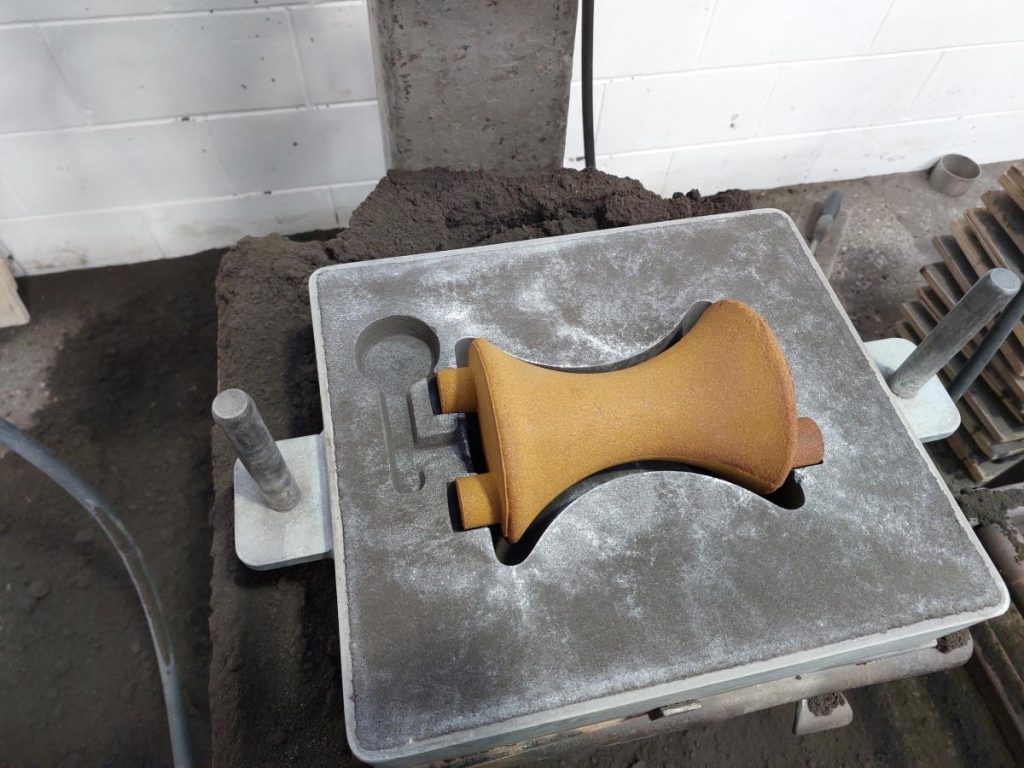
Shell cores are produced using a specialist machine that injects resin-bonded sand under pressure into a die. This process allows for very fine detail and tight tolerances — producing consistent, high-accuracy cores suitable for demanding casting applications.
Once set up, the shell core process allows for rapid manufacture and consistent quality across volumetric quantities — bringing the unit price down significantly on repeat production runs. The resin system used is designed for full submersion in molten metal with minimal outgassing.
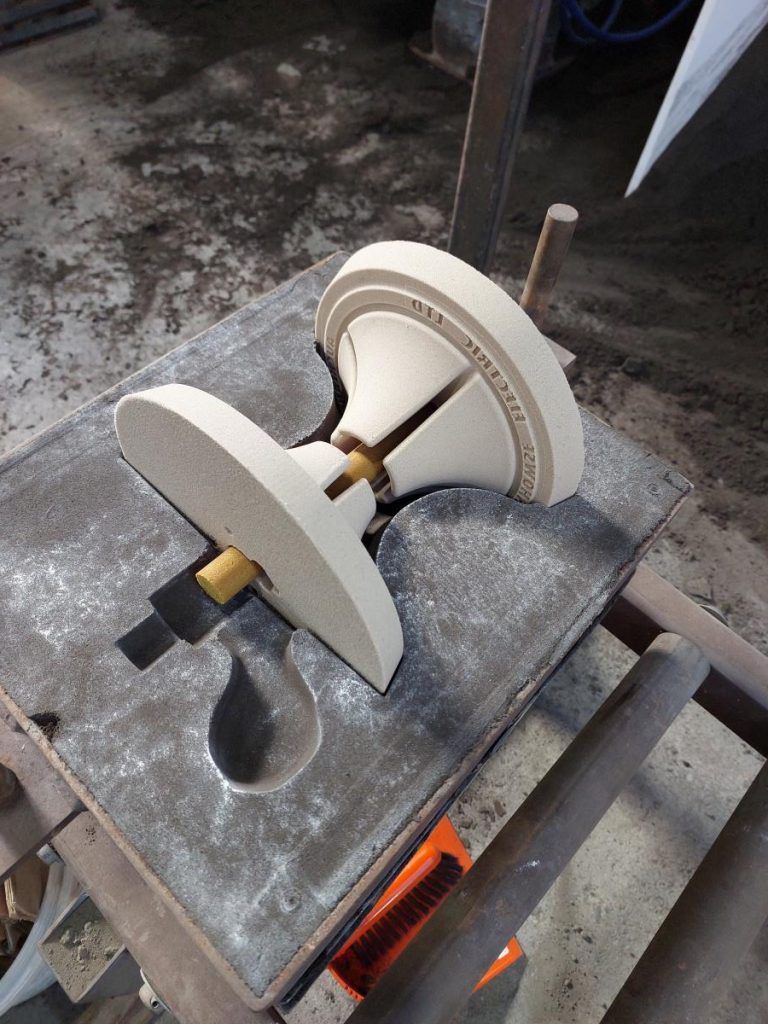
CO2 sodium silicate cores use a sodium silicate binder that is hardened by passing CO2 gas through the sand mixture. This produces a robust, reliable core that handles the demands of most casting applications — a tried and tested method that delivers consistent results.
This process is particularly well suited to one-off and short-run requirements where setting up a shell core die would not be economically viable. It is versatile, fast to set up, and produces a core strong enough to withstand the pressures of pouring molten metal.
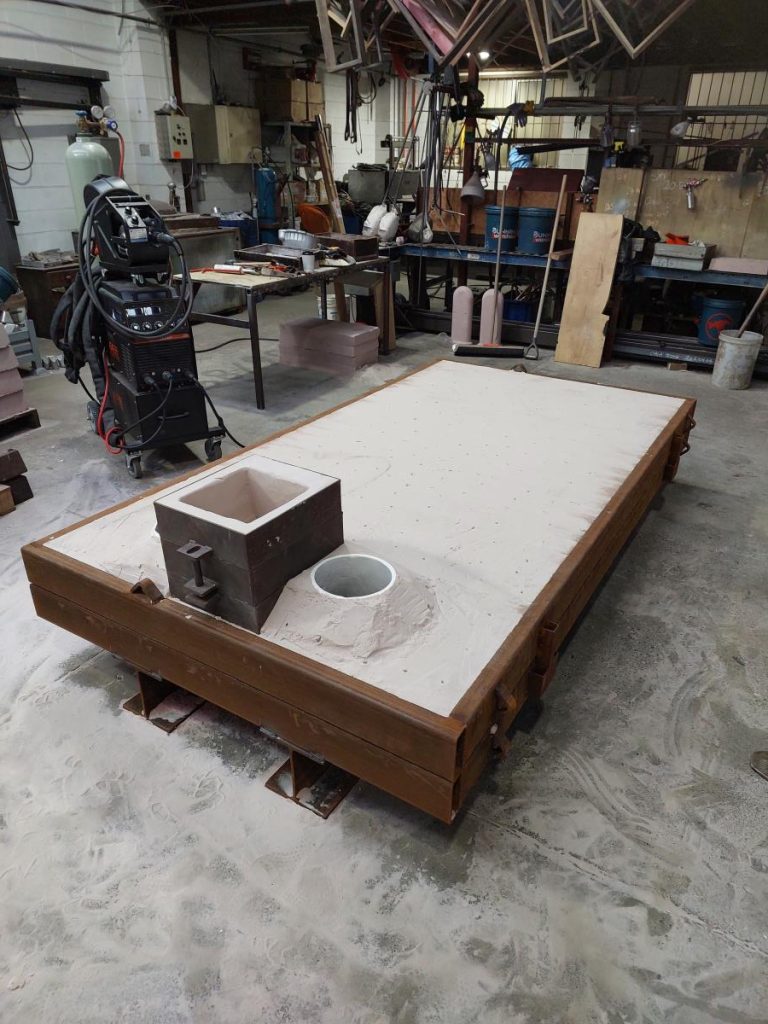
Water jacket cores are one of the most challenging core making applications — they are typically frail in nature, difficult to ram by hand, and cannot allow for gas to be generated within the casting during the pour. Getting them wrong means a rejected casting.
Our specialist core blowing machine injects sand under pressure into the die, creating water jacket cores that are consistent, accurate and gas-tight. This is a capability that many NZ foundries simply don’t offer in-house — it’s a key part of what sets Molten Manufacturing apart for complex engine and industrial castings.
Most foundries outsource their core making to third-party suppliers. We don’t. Here’s why that matters for your job.
No waiting for cores to arrive from an external supplier. Our cores are made onsite and ready when your casting is — keeping your job moving without unnecessary delays.
Every core is made under the same roof as your casting. We inspect and approve each core before it goes into the mould — catching problems before they become rejected castings.
You deal with Shaun and the Molten team — not a foundry and a separate core supplier. One conversation covers everything from pattern to finished casting.
From consultation to finished casting — here’s how a cored job flows through our Glendene foundry.
We review your design, drawings or existing parts. Shaun will identify the right core type for your geometry and application — and flag any outgassing or fragility risks early.
For shell and water jacket cores, a die is required. We’ll advise on tooling options — from machined dies for high-volume production to simple hand-rammed approaches for one-offs.
Cores are produced onsite using our core blowing machine or CO2 process. Each core is inspected before use. No third-party delays — production moves at our pace.
Cores are set into the mould and your alloy is poured. After casting, cores are broken out and the internal cavities are revealed. Fettling and finishing follow onsite.
Molten Manufacturing provides onsite sand core making services from our Glendene, Auckland facility. We produce shell cores, CO2 sodium silicate cores and specialist water jacket cores — all in-house, as part of a complete metal casting service.
Our core making capability is directly integrated with our greensand, hardsand and investment casting operations. This means your cored castings are produced under one roof, with no reliance on external core suppliers and no risk of delays or quality inconsistencies between the core and the mould.
We serve clients throughout New Zealand across marine, automotive, industrial, agricultural and engineering sectors — any application where internal cavities, cooling passages or complex internal geometry is required.
The right core type depends on your application, the geometry of the internal cavity required, the quantity needed and whether outgassing tolerance is a factor.
Shell cores are best for high-volume, repeatable production runs requiring fine detail and tight tolerances. CO2 silicate cores suit one-offs and short runs where no die tooling exists. Water jacket cores are the specialist choice for engine components and any application where gas generation inside the casting cannot be tolerated.
Not sure which suits your job? Call Shaun on 022 088 2040 — he’ll tell you exactly what’s needed and what it’ll cost.
A sand core is a preformed shape made from bonded sand that is placed inside a mould before casting. When molten metal is poured in, the core takes up space — creating an internal void or cavity in the finished casting. They are used wherever internal passages, hollow sections or complex internal geometry is required that cannot be achieved through moulding alone.
Our core making facility is primarily used as part of our own complete casting service. If you have a specific requirement, contact Shaun to discuss — we'll give you a straight answer on whether we can help.
Water jacket cores are typically thin-walled, fragile and need to maintain their shape precisely during the pour. They also cannot allow any gas to be generated inside the casting — which rules out many standard binder systems. Our pressure-injection core blowing machine produces water jacket cores that are consistent and gas-tight, making them suitable for engine blocks, cylinder heads and other demanding applications.
Shell cores and water jacket cores require a die. CO2 sodium silicate cores can be hand-rammed without a die, making them the most flexible option for one-offs and short runs. We'll advise on the most cost-effective tooling approach for your quantity and timeline.
Cores can be used with all alloys we cast — aluminium, copper-base alloys (bronze, brass, gunmetal) and iron. The core type and binder system are selected based on the alloy's pouring temperature and the casting's specific requirements. Our metallurgist is available if any technical questions arise.
Onsite cores, no third-party delays. Call Shaun for a straight answer.