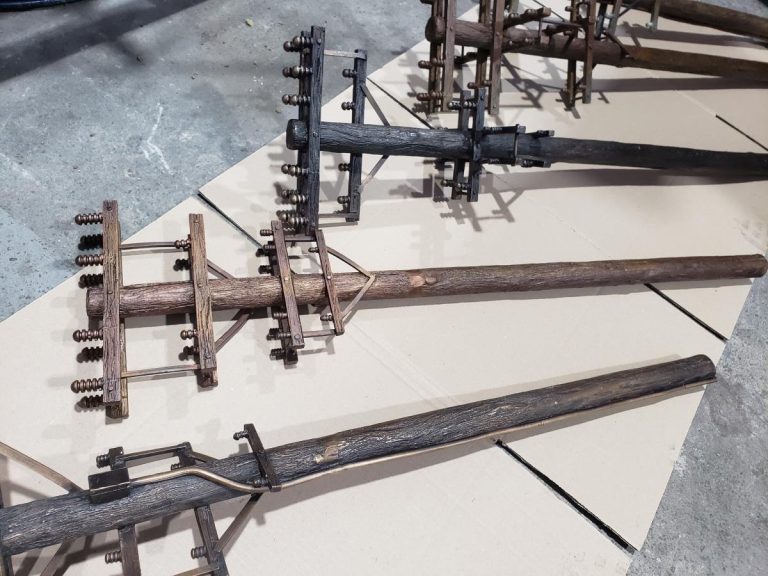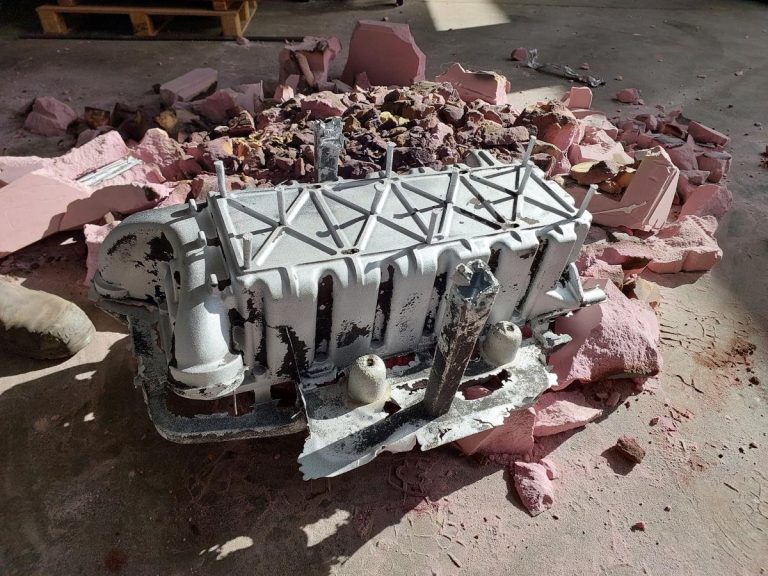
One of the most common questions we get at Molten Manufacturing is: “Which casting method should I use?” The honest answer is — it depends. Size, complexity, quantity, surface finish and budget all play a role. Get it right and your casting is produced efficiently and cost-effectively. Get it wrong and you’ll spend more time and money than necessary.
This guide breaks down the three main casting methods we use at our Glendene, Auckland foundry — greensand, hardsand and investment casting — so you can make an informed decision before you pick up the phone.
What Is Greensand Casting?
Greensand is one of the oldest and most proven casting methods in metalworking — and for good reason. It uses a clay-bonded sand (specifically Bentonite) rammed into steel flasks to produce castings at production scale. The term “green” refers to the moisture content of the sand, not its colour.
The greensand used at Molten Manufacturing is naturally sourced from New Zealand and is world-renowned for its quality. Its clay content and angular grain structure allow for excellent green strength and fine surface finishes when conditions are right.
When is greensand the right choice?
Greensand works best when:
- You need a non-complex casting without deep undercuts
- You’re ordering in volume and unit cost is a priority
- Your part doesn’t require extremely fine surface detail
- You’re casting aluminium, copper-base alloys or iron
The main limitation of greensand is geometry. No undercuts are possible, and each mould is hand-manipulated — meaning the skill of the moulder is a significant factor. The deeper and finer the detail, the more challenging greensand becomes.
Greensand pros and cons
✅ 100% reusable sand — lowest cost per unit at volume ✅ Excellent surface finish for straightforward geometries ✅ High daily production volumes — ideal for repeat orders ✅ Works well with aluminium, bronze and iron alloys
❌ No undercuts possible ❌ Less suitable for complex or highly detailed geometry ❌ Quality is skill-dependent
What Is Hardsand Casting?
Hardsand uses a resin-bonded sand to create a mould that is far more forgiving than greensand. The resin binder creates a firm, robust mould that handles complex geometry — minor undercuts break away locally rather than destroying the whole mould, and larger undercuts can be cored into multi-segment moulds.
Hardsand moulding is one of Molten Manufacturing’s specialties. One of its most impressive features is that almost any physical object can be used as a pattern — plasticine, polystyrene, wood, old castings, plastic, wax, cardboard. If it holds its shape, we can work with it.
A proprietary blended refractory paint applied to the mould surface can produce bronze finishes that rival investment casting — at a fraction of the cost.
When is hardsand the right choice?
Hardsand works best when:
- Your casting has complex geometry or minor undercuts
- The part is large — beyond what greensand can handle
- You want to use an existing physical object as a pattern
- You need a bronze finish rivalling investment casting, at lower cost
- You’re doing a one-off or short run
Hardsand pros and cons
✅ Handles complex geometry and minor undercuts ✅ Large part capability — beyond greensand limits ✅ Can cast from almost any physical object ✅ Non-destructive — originals kept intact ✅ Refractory paint delivers bronze finish rivalling lost wax
❌ Higher setup time for simple parts ❌ Not as cost-effective as greensand at high volume for simple geometry
What Is Investment Casting?
Investment casting — also known as lost wax casting — produces the highest dimensional accuracy and finest surface finish of all three methods. A ceramic shell is built up over a wax or PLA pattern over approximately four days of dipping, then fired to 1000°C. The wax is removed and molten metal poured directly into the void.
At Molten Manufacturing, the dipping process is carried out in a climate-controlled environment to ensure humidity and temperature requirements are met — creating the strongest possible shell for gallery-quality results every time.
When is investment casting the right choice?
Investment works best when:
- You need the finest possible surface finish
- Your part has complex undercuts, thin walls or intricate organic detail
- Dimensional accuracy is critical
- You’re producing gallery-quality bronze sculpture
- Minimal post-cast fettling is a priority
Investment casting pros and cons
✅ Highest dimensional accuracy of all three methods ✅ Finest surface finish — detail as fine as a fingerprint ✅ Complex undercuts and organic shapes possible ✅ Minimal fettling required ✅ Ideal for gallery-quality artwork and precision components
❌ Longer lead time — shell build takes around four days ❌ Higher cost per unit than greensand at volume ❌ Not suitable for very large parts
Quick Comparison — Greensand vs Hardsand vs Investment
| Greensand | Hardsand | Investment | |
|---|---|---|---|
| Complexity | Low–Medium | Medium–High | High |
| Undercuts | None | Minor–Major (cored) | Yes |
| Surface Finish | Good | Very Good–Excellent | Excellent |
| Volume | High | Low–Medium | Low–Medium |
| Unit Cost | Lowest | Medium | Higher |
| Lead Time | Fastest | Fast | Longer |
| Best For | Production runs | Complex/large parts | Precision/art |
Still Not Sure Which Method to Use?
That’s what we’re here for. At Molten Manufacturing we’ll always recommend the right process for your job — not whichever method suits us that day. Bring us your drawing, photo, sketch or physical part and we’ll give you a straight answer on the best approach and what it will cost.
Call Shaun on 022 088 2040 or send an enquiry.